

Winter Wildlife: The Spectacular Starling Murmurations at Roughtor
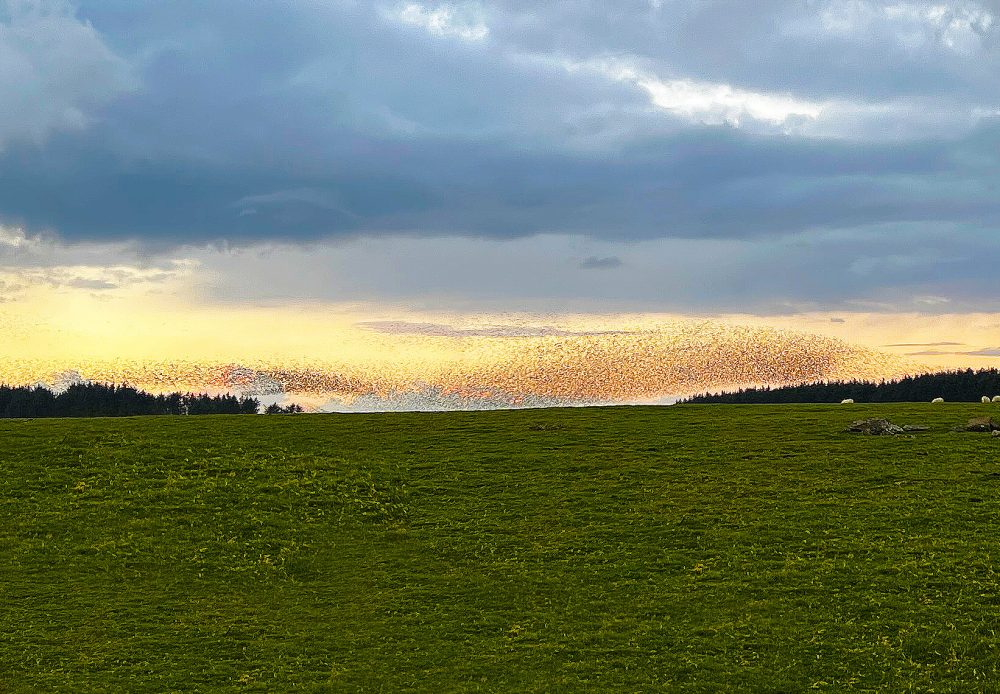
We went to see the starling murmurations over at Roughtor last night and they were truly spectacular. If you haven’t seen one before, a murmuration is one of those natural spectacles that is difficult to describe until you’ve actually stood underneath one. As daylight fades, hundreds – sometimes thousands – of starlings gather in the sky, twisting, turning and swooping together in a huge, constantly changing cloud of birds.
And Roughtor is a particularly special place to see them.
What exactly is a murmuration?
Starlings are sociable birds and, during the winter months, large numbers gather together to roost. Britain has resident starlings all year round, but their numbers increase significantly in autumn and winter as birds migrate here from northern Europe.
Before settling down for the night, the birds gather above their chosen roost and perform their extraordinary aerial display.
The flock can suddenly stretch out into a long ribbon, contract into a dense ball, split apart and then come back together again. One moment the birds seem to be moving in one enormous shape; the next, the whole flock can change direction almost instantaneously.
It looks choreographed, but there is no conductor. Each bird is responding to the movements of the birds immediately around it, creating those incredible patterns across the sky. Scientists believe the behaviour also offers protection from predators – there is safety in numbers, and a huge, rapidly moving flock makes it much harder for a bird of prey to single out an individual starling.
When can you see them?
The best time is around dusk, just before the birds settle down for the night. At Roughtor, the display we watched started at roughly 30 minutes before sunset, so you don’t want to arrive at the last minute as it can be busy.
The exact timing and size of the murmuration will vary from evening to evening, though. Weather, light levels and the birds’ feeding patterns all have an influence, and the roosting location can change too. So there is always an element of luck involved – which perhaps makes seeing a really spectacular one even more special.
Murmurations are primarily a winter spectacle, with November through February generally being the best period to look for them.
A winter evening at Roughtor
There is something particularly atmospheric about watching them over Bodmin Moor. Roughtor is already an extraordinary landscape, with its granite tors, open moorland and enormous skies. As the light disappears and the landscape becomes a silhouette, the arrival of thousands of starlings adds a completely different dimension.
Then, almost as quickly as it began, the display comes to an end. The birds descend towards their roost and the moor falls quiet again.
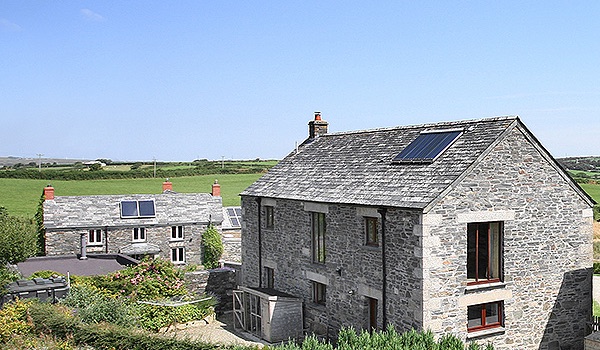
It’s a wonderfully simple winter experience – wrap up warm, head out in the late afternoon, watch one of Cornwall’s most remarkable natural spectacles and then head back to Helsbury for a warm cottage and perhaps a dip in the swimming pool.
And if you’re staying with us this winter, it’s definitely one to put on your list.
Just remember to check recent local sightings before setting off – murmurations are wild, unpredictable events and the birds don’t always perform on cue!