

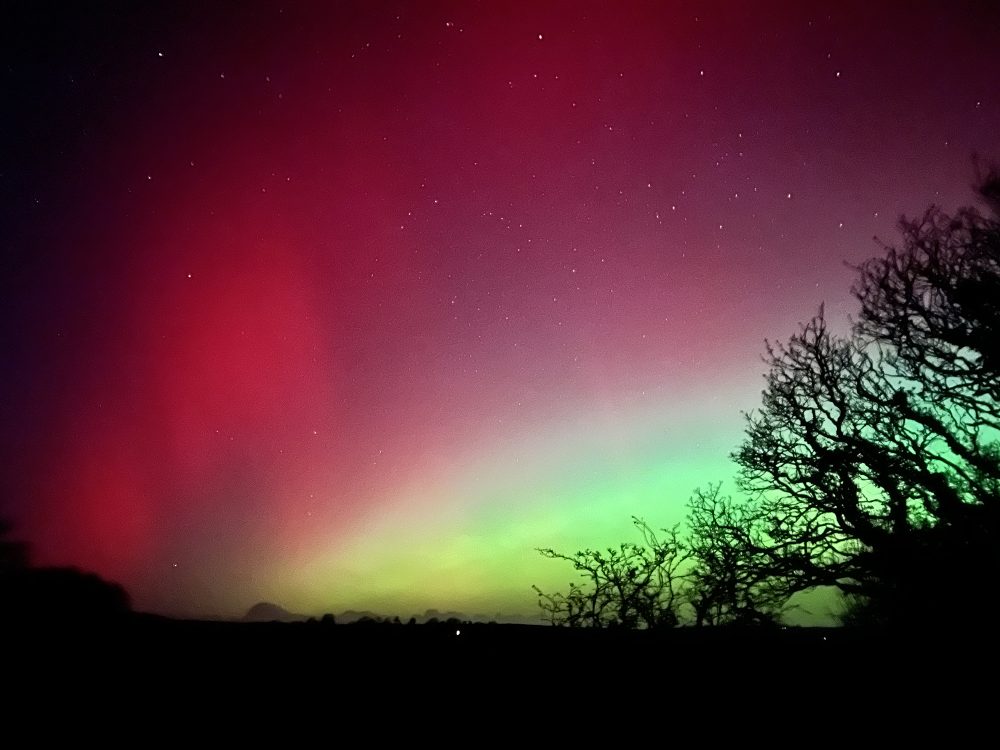
A rare and breathtaking display of the Northern Lights
On the 19th January, the skies above Cornwall were graced with an extraordinary natural spectacle as the Northern Lights — the aurora borealis — lit up the heavens in hues of green, pink and red. What is normally a phenomenon seen closer to the Arctic was visible much farther south than usual thanks to an intense geomagnetic storm that pushed the auroral display down over the UK.
Sky watchers in the South West reported seeing the lights as the sun’s charged particles collided with Earth’s magnetic field, creating shimmering waves that danced above the horizon of Cornwall’s night sky. The display was vivid enough in places like Devon and Cornwall that residents and photographers stepped out into the chill to capture images of the display.
This unusual sighting came following a powerful coronal mass ejection (CME) — a massive burst of solar material from the Sun — that hit Earth’s magnetic field with remarkable force. The resulting strong geomagnetic storm expanded the auroral oval, allowing the lights to be visible much farther south than typical aurora latitudes. Weather agencies and space weather forecasters noted that this solar activity is one of the most intense in recent years, driving aurora visibility across parts of the UK not usually treated to such displays.
While Cornwall’s night sky was the scene of smiles, many experts reminded observers that clear, dark skies away from urban light pollution make all the difference when trying to see this cosmic light show. And for those who stayed up late last night, this rare celestial event was a reminder that even here in Cornwall, nature can put on a breathtaking performance when the conditions align.
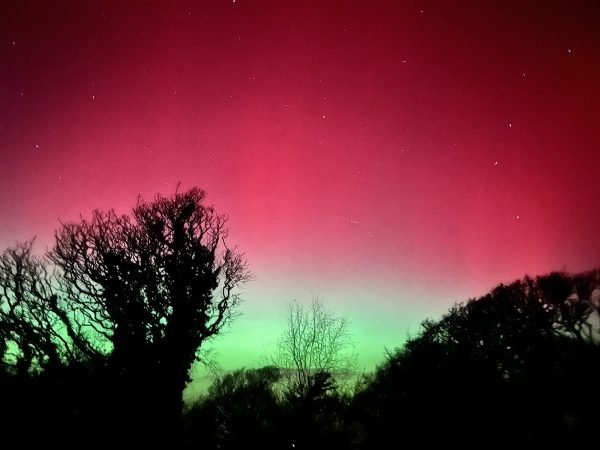
northern lights cornwall
Here in Cornwall, the aurora was more than just a glow on the horizon, some residents and sky-watchers reported glimpses of the lights, sometimes vivid enough to see with the naked eye. The Met Office had predicted the impact of the solar storm, prime conditions for aurora visibility if skies stayed clear. Our pictures in this post were taken on an iphone, which really accentuated the colours.
While auroras are usually associated with high latitudes like northern Scandinavia or Canada, strong solar activity like this can push the auroral oval much farther south than usual. Observers were reminded that clear skies and minimal light pollutionare key to catching the show — and that sometimes, even relatively rare events can grace the skies above Cornwall. We are very lucky to in an International Dark Sky Landscape here on Bodmin Moor.
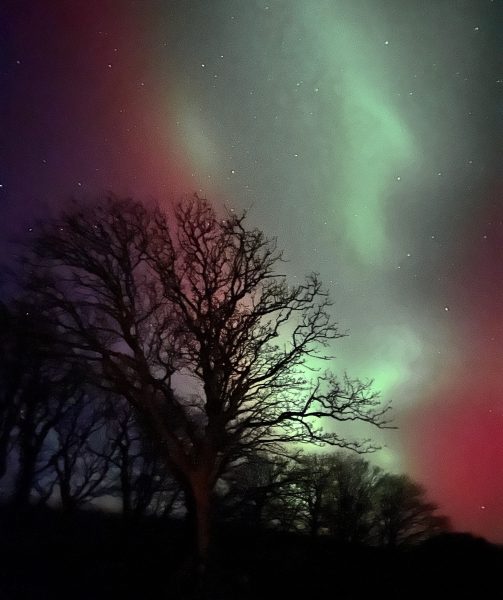
northern lights cornwall