

Why Widemouth Bay’s Sand Dunes Are Changing…
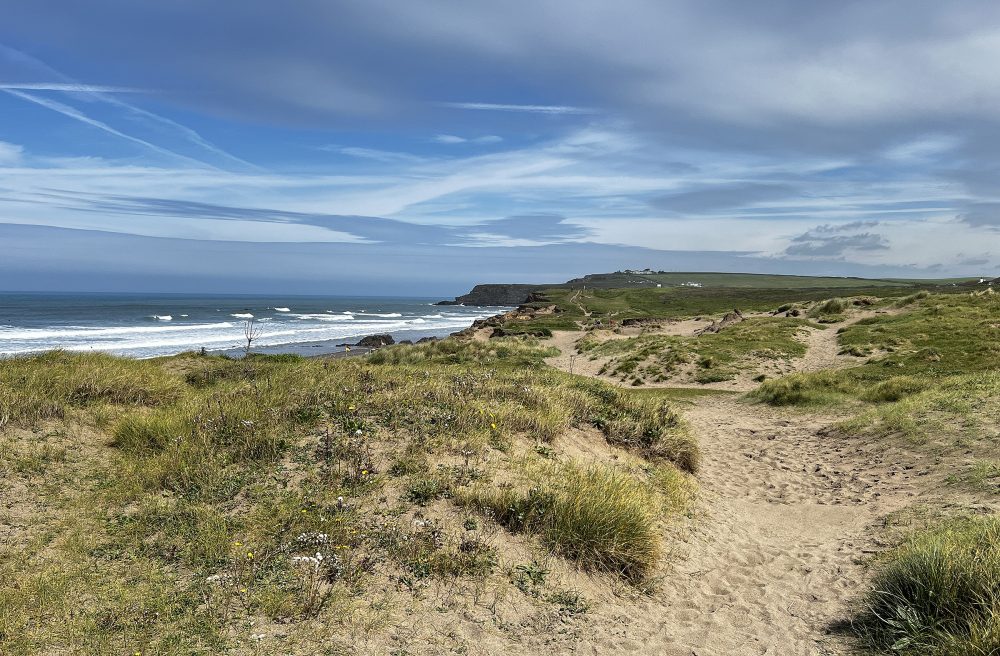
If you’ve visited Widemouth Bay recently, you may have noticed something a little different in the sand dunes. Alongside the sweeping sands and rolling surf, work has been taking place to reshape parts of the beach frontage and surrounding landscape. But before you worry that one of North Cornwall’s best-loved beaches is being overdeveloped, the reality is quite the opposite — Widemouth’s dunes are being given room to thrive again.
The project forms part of Cornwall’s wider effort to protect some of its most vulnerable coastline from the effects of climate change, coastal erosion and rising sea levels. Instead of relying solely on hard sea defences like concrete walls, the focus here is on helping nature do what it does best.
Sand Dunes
Healthy sand dunes are much more than attractive scenery. They act as a natural barrier against storms and flooding, helping absorb wave energy during extreme weather. They also provide habitats for wildlife, including insects, birds and coastal plants that thrive in these shifting sandy environments.
At Widemouth Bay, work has included changes to parts of the car park and surrounding infrastructure to create a more natural transition between the beach and dunes. Over time, this should allow the landscape to move and evolve more naturally, rather than being restricted by hard surfaces and fixed boundaries.
For visitors, this means Widemouth should remain every bit as enjoyable — whether you’re surfing the Atlantic waves, exploring the coastal path or simply relaxing on the sand. In fact, the long-term goal is to protect what makes the beach so special for generations to come.
So next time you visit Widemouth Bay, take a moment to look beyond the surf. Those windswept dunes are quietly doing an important job — helping preserve one of Cornwall’s most beautiful beaches while keeping its wild character firmly intact.
You can find out more about the councils plans for the sand dunes here